
What is Manlift Equipment: Types, How to Operate, and Key Uses

Industries from construction to maintenance need reliable ways to get workers up high safely. There are numerous ways to get workers working at height, such as harnesses, scaffolding, and ladders, but one of the safest ways to do this is through a manlift.
In this blog, we’ll discuss what manlift equipment is, its parts, how to operate one, and its various uses.
What is Manlift Equipment?
A manlift is an aerial work platform designed to lift workers, tools, and materials to elevated areas. It provides a stable and secure platform, allowing tasks to be completed at heights that would otherwise be difficult or unsafe.
Unlike ladders or scaffolding, manlift equipment offers mobility, flexibility, and stability. It can move across job sites and adjust its height based on the task. Most units are mounted on a truck or built on a self-propelled base.
How Does A Manlift Work?
A manlift operates through a coordinated system that enables safe, controlled lifting. The key parts of a manlift include:
- Base – The foundation of the manlift that supports the entire machine. It may include wheels or outriggers to maintain steady positioning.
- Lifting Mechanism – The system responsible for raising and lowering the platform, usually powered by hydraulics or electric motors to ensure smooth and controlled movement.
- Platform or Basket – The area where the operator stands and performs their job. It is equipped with guardrails for safety.
- Control System – The set of controls used to operate the manlift. These are typically located on the platform and at the base, allowing precise movement and positioning.
In most units, hydraulic systems play a key role. They use fluid pressure to extend the lifting mechanism when the operator activates the controls. This allows the platform to move upward smoothly while staying level.
Built-in safety features help keep operations secure. These include sensors that prevent overloading, as well as stabilizers that keep the equipment balanced throughout the task.
Types of Manlifts
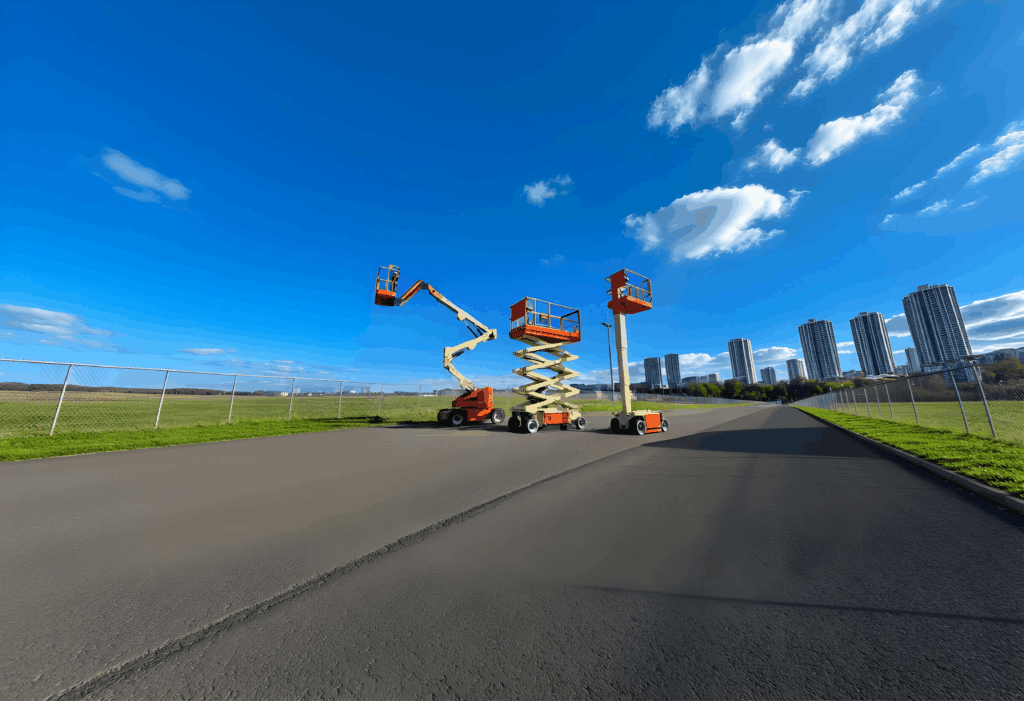
Manlifts come in three types, each suited for specific tasks and environments.
Scissor Lifts
This type of lift moves vertically using a crisscrossing support system. They are ideal for indoor use and provide a wide platform for multiple workers.
Boom Lifts
Boom lifts have an extendable arm that can reach both vertically and horizontally. This makes them suitable for complex tasks where access is limited.
Vertical Mast Lifts
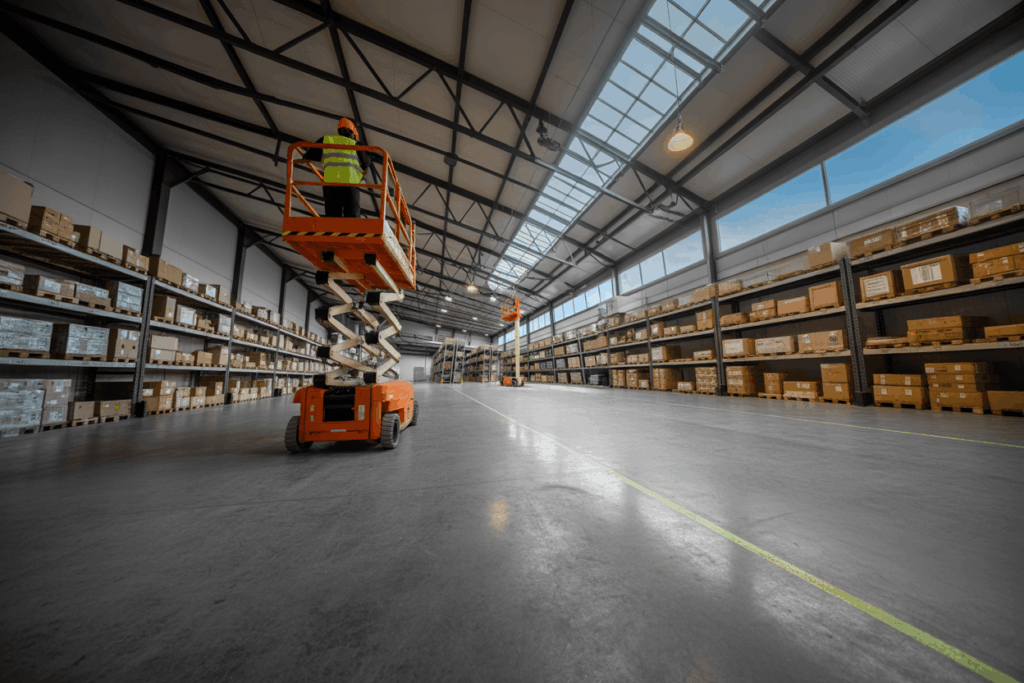
These are compact and designed for tight spaces. They are often used in warehouses and indoor maintenance work.
Each type of lifting equipment shares common manlift parts like the platform, controls, and lifting system, but their design varies depending on use.
How to Operate A Manlift
Operating a manlift requires proper training and careful attention to safety. Follow these basic steps:
1. Conduct a Pre-Operation Inspection
Check the unit for visible damage, fluid leaks, or worn parts. Make sure all safety features are working properly.
2. Position the Equipment
Place the manlift on stable, level ground. Engage stabilizers or outriggers if needed to prevent tipping.
3. Secure the Operator
Enter the platform and wear proper safety gear, such as a harness. Ensure everything is properly fastened. Secure the area to ensure the lift’s path is unobstructed.
4. Lift the Platform
Use the controls to raise the platform slowly to the desired height. Maintain steady and controlled movement.
5. Operate with Caution
Move carefully while on the platform. Avoid sudden movements and stay within the load capacity. Maintain clear communication with ground personnel at all times.
6. Lower and Shut Down
After completing the task, lower the platform carefully. Turn off the equipment and store it properly to maintain its condition.
Uses of A Manlift Equipment
Manlifts are widely used across different industries due to their versatility.
Construction Projects
Manlifts help workers install structures, handle materials, and perform finishing tasks at height. This equipment is especially useful for tasks, such as steel erection, facade installation, and roofing. They provide a stable working platform, which improves both safety and efficiency on busy job sites.
Maintenance and Repairs
Facilities use manlifts for lighting, painting, and building maintenance. Manlift equipment allow safe access to ceilings and high walls, making routine inspections faster and reduces downtime, especially in large commercial or industrial spaces.
Logistics and Warehousing
In warehouses, manlifts assist with inventory management and shelving operations. They provide a more stable way to reach high storage areas than ladders, allowing workers to organize stock and handle goods safely.
Utilities and Telecommunications
This type of equipment is essential for installing and repairing power lines, communication towers, and street lighting. Their mobility allows crews to move quickly between locations while maintaining safe working conditions at height.
Industrial Applications
Factories rely on manlifts for equipment inspection and servicing in hard-to-reach areas. They support regular maintenance work, helping prevent costly breakdowns and ensuring smooth operations.
Elevate Efficiency with Confidence
Manlifts revolutionize high-reach tasks in construction, maintenance, logistics, and beyond, delivering superior safety, mobility, and efficiency over ladders or scaffolding. Their stability, versatility, plus easy training for operating manlift equipment, make them the smart upgrade for compliant, high-performance work.
Ready to elevate your operations? Contact CIVIC Merchandising Inc. today for expert guidance and seamless after-care services for heavy equipment in the Philippines.