
Vibratory Roller vs Plate Compactor: What’s the Difference and Which Should You Use?
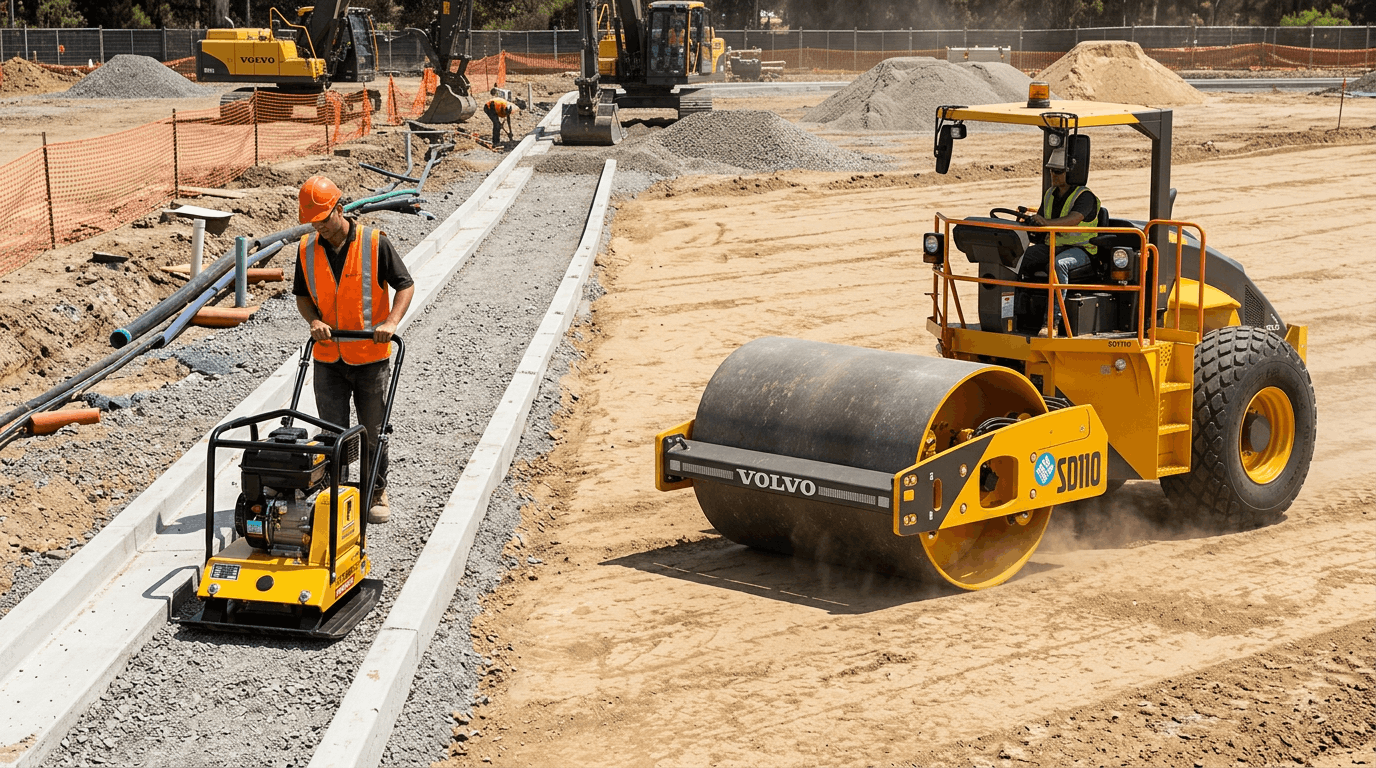
Compaction is a critical step in construction, as it ensures the stability and long-term durability of surfaces. For most businesses, the choice comes down to a vibratory roller versus a plate compactor. Each machine serves a specific purpose depending on the project.
Understanding their differences helps improve efficiency, reduce rework, and achieve better results on site. In this blog, we differentiate the two types of compactors, from their features to their applications, to help you select the right equipment for your needs.
Roller Compactor Vs. Plate Compactor: Key Differences
Definition and Features
Roller Compactor
A roller compactor is a heavy machine designed for large-scale compaction tasks. It uses one or more large drums to compress soil, asphalt, or gravel. Many models include vibration systems that enhance compaction performance. These machines are commonly used in road construction and large infrastructure projects.
Plate Compactor
A plate compactor is a smaller, portable machine with a flat steel plate at the base. It is designed for compacting soil, sand, or asphalt in confined areas. It is easy to maneuver and is often used for smaller construction tasks such as pathways, driveways, and landscaping.
Compaction Mechanism
Roller Compactor
A roller compactor uses a combination of weight and vibration to compress materials. The heavy drum applies consistent pressure while vibration forces particles closer together. This results in a dense and stable surface, especially for large areas.
Plate Compactor
A plate compactor works through rapid vibrations generated by the engine. These vibrations move the plate up and down, compacting the surface beneath. The force is concentrated in a smaller area, making it effective for detailed work.
Pressure Distribution and Compaction Depth
Roller Compactor
Roller compactors distribute pressure evenly across a wide surface. Their heavy weight allows them to compact deeper layers of soil or asphalt, making them ideal for projects that require strong foundational support.
Plate Compactor
Plate compactors apply pressure over a smaller surface area. While effective, they do not reach the same compaction depth as rollers. Because of their compact size, they are best suited for shallow layers and finishing work.
Uses or Best Applications
Roller Compactor
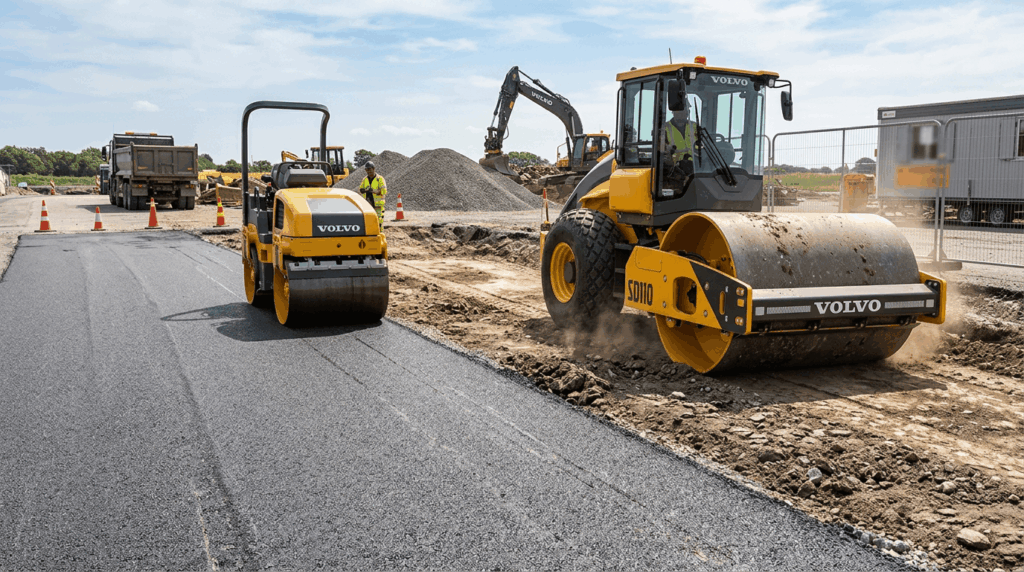
Roller compactors are commonly used for road construction, highways, large foundations, and industrial projects. They are ideal for tasks that involve large open spaces and require uniform compaction over wide areas.
Roller compactors are ideal for tasks that involve large open spaces and require uniform compaction over wide areas. Vibratory soil compactors are ideal for road base layers, embankments, or site preparation. Meanwhile, asphalt vibratory rollers are commonly used for road construction, highways, large foundations, and industrial projects.
Plate Compactor
Plate compactors are best for small to medium projects. These include sidewalks, driveways, trenches, and landscaping. They are also useful for compacting soil in tight or hard-to-reach areas where larger machines cannot operate.
Limitations
Roller Compactor
Roller compactors are designed for larger areas. They require more space to operate and are not likely to reach narrow sections. Because of its size, it is more efficient in large-scale projects and may be impractical for smaller projects. Transporting these machines can also require additional planning.
Plate Compactor
Plate compactors are limited in terms of compaction depth and coverage. They may require multiple passes to achieve the desired density. For large projects, using a plate compactor can be time-consuming and less efficient.
Which One Is Right For You: Plate Compactor Vs Vibratory Roller?
Choosing between a roller compactor versus a plate compactor depends on the scope and requirements of your project.
For large construction sites that require deep and uniform compaction, a vibratory roller is the better option. It delivers consistent results and covers more ground in less time.
For smaller projects or areas with limited space, a plate compactor offers better control and flexibility. It is easier to handle and more cost-effective for short-term or detailed work.
In addition to project size, consider soil type and the required compaction depth to guide your choice of compactor equipment.
Find the Right Tool For the Job
Understanding the differences between a plate compactor and a roller helps ensure better project outcomes. Each machine offers unique advantages that suit specific applications. Selecting the right equipment improves efficiency, reduces costs, and supports long-term durability. With the right choice, every project starts on solid ground.
Both the plate compactor and vibratory roller offer unique advantages that suit specific applications in a worksite. Understanding their differences can help you select the best compactor equipment and secure better project outcomes.
With the right choice, every project starts on solid ground. Get in touch with CIVIC Merchandising Inc. to find the best compactor price in the Philippines.