
How to Reduce Volvo Truck and Heavy Equipment Fuel Consumption

Trucks and heavy equipment are essential for keeping operations moving, from transporting goods over long distances to supporting demanding on-site tasks. Every kilometer traveled and every hour the engine runs directly affects heavy equipment and truck fuel consumption, adding to overall operating expenses.
Fuel is often one of the highest ongoing costs for fleet operations. Managing fuel use more carefully helps reduce overhead and improve profitability. With the right strategies, businesses can control costs while maintaining strong performance on the road.
How to Reduce Trucks and Heavy Equipment Fuel Costs
You have more control over your Volvo Truck’s fuel consumption than you may think, most of which depends on how you handle and manage each vehicle. Here are the best practices to help you conserve fuel costs:
1. Maintain Consistent Driving Speeds
Fuel use increases when trucks frequently speed up and slow down. Sudden acceleration and hard braking waste energy.
Volvo trucks are equipped with systems like I-Shift, which selects the optimal gear for different driving conditions. When combined with cruise control, it ensures smooth acceleration and efficient engine performance. This helps drivers maintain a steady pace and improves overall fuel efficiency.
However, training and reminding your drivers to practice smooth driving habits can significantly lower fuel consumption over time.
2. Reduce Idle Time
Leaving the engine running while parked burns fuel without moving the vehicle. This adds unnecessary cost, especially during long waiting periods.
This applies to both trucks and heavy equipment on site. Volvo construction equipment offers auto-idle and engine shut-down features that help reduce unnecessary fuel burn. Meanwhile, Volvo trucks include smart idle management features that help limit unnecessary engine use.
Ultimately, turning off equipment during long pauses is a simple but effective way to lower costs.
3. Keep Vehicles Well-Maintained
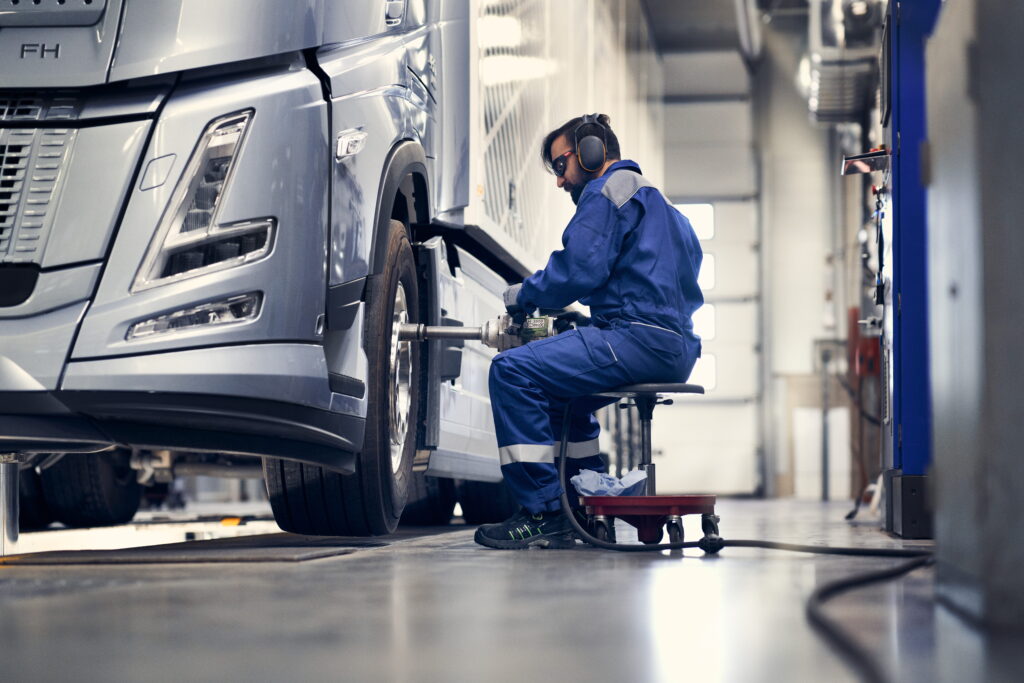
Regular maintenance ensures that trucks operate at peak efficiency. Clean air filters, properly functioning injectors, and well-lubricated engine parts all contribute to better fuel use. Ignoring maintenance can lead to higher consumption and costly repairs. A consistent service schedule protects both performance and budget.
For Volvo FH and heavy equipment users, the telematics gateway makes maintenance easy and convenient. This built-in feature allows Volvo technicians to remotely inspect the unit, detect potential issues, and even support troubleshooting without requiring a workshop visit.
4. Monitor Tire Pressure and Condition
Keeping tires at the right pressure helps trucks and wheeled equipment move more easily. Underinflated tires force engines to work harder, increasing fuel consumption. For tracked equipment, proper track tension and condition are also key to efficient movement.
Regularly checking tire and track condition is important in maintaining smooth operation and lower fuel use.
5. Optimize Route Planning
Longer routes and heavy traffic can increase fuel usage. Planning efficient routes helps reduce travel distance and idle time. Volvo’s integrated navigation and telematics systems provide real-time data to help drivers avoid traffic and choose better routes.
On-site, planning equipment movement and positioning reduces unnecessary travel and idle time. This leads to better fuel control across operations.
When technology is used properly and plans are implemented, businesses experience fewer delays and more controlled fuel consumption.
6. Manage Vehicle Load
Overloading a truck places extra strain on the engine, which increases fuel consumption. At the same time, underloading may result in more trips than necessary.
Balancing load capacity ensures that each trip is as efficient as possible. Additionally, practice proper load distribution to improve safety and handling.
7. Train Drivers for Fuel Efficiency
Driver behavior directly affects a Volvo truck’s average fuel consumption. With proper training, drivers can learn how to maintain steady speeds, avoid sudden stops, and use in-truck features to anticipate traffic conditions.
The Volvo Truck fuel savings calculator shows that businesses can save up to 10% on annual fuel consumption through its fuel-efficiency features. Couple this with fuel-efficient driving practices and businesses will see a difference over time. Well-trained drivers not only improve fuel efficiency but also promote safer and more controlled operations.
8. Utilize Technology and Monitoring Tools
Modern trucks often include telematics systems that track fuel usage, driving performance, and idle time. These tools provide valuable data that can guide improvements. Fleet managers can identify patterns and address inefficiencies quickly. Technology makes it easier to maintain consistent fuel savings across operations.
Driving Efficiency for Long-Term Value
Reducing truck fuel costs is a practical way to improve business performance. Lower fuel costs lead to better margins and more reliable operations. With proper maintenance, skilled drivers, and efficient planning, companies can achieve optimal fuel consumption and consistent savings. For expert guidance and quality equipment, working with,CIVIC Merchandising Inc., a trusted truck dealer ensures long-term success.