
Beyond Diesel: How Electric Construction Equipment is Transforming Urban Job Sites

For over a century, a construction site in a residential area has meant one thing: disruption. We’ve all lived through it—the 7:00 AM roar of engines, the persistent smell of diesel exhaust drifting through open windows, and the vibration of heavy machinery that seems to rattle the very foundation of the neighborhood.
But as we look at the urban landscape of 2026, a quiet shift is happening. The industry is moving away from “power at any cost” toward a model of Community-First Construction. This isn’t just a win for the environment; it’s a radical improvement in how we experience our cities.
1. Reclaiming the Morning: The End of “Noise Tax”
In a traditional world, noise is the price a community pays for progress. But what if the machinery itself was the protector of the peace?
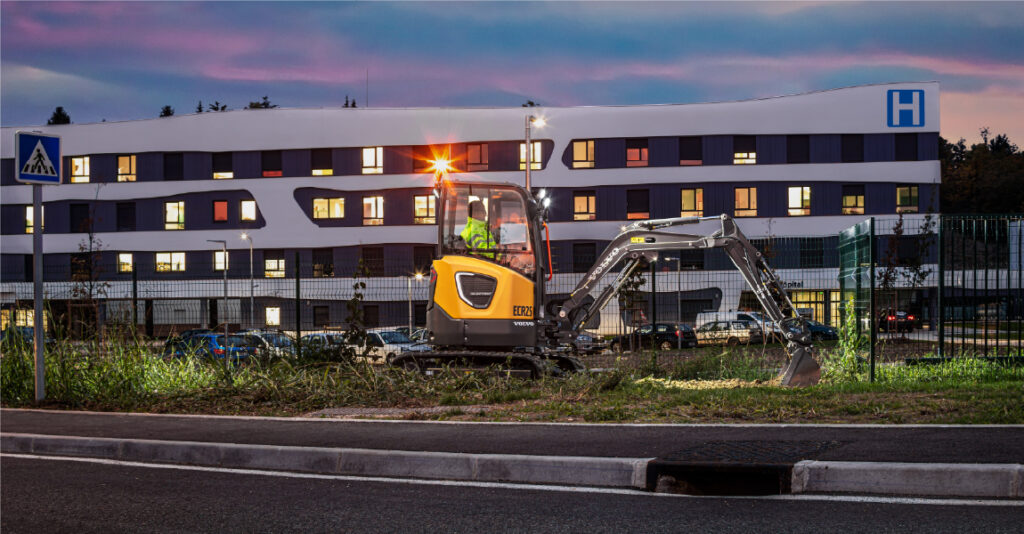
Modern electric technology has reached a point where a compact excavator—like the Volvo ECR25 Electric—operates at a decibel level comparable to a normal conversation. This silence does more than just help neighbors sleep; it changes the logistics of building. It allows for work in sensitive areas like hospital zones or school districts without the usual disruption. We are moving toward a world where a new bike path or utility line can be installed “at home in the city”—quietly, at any time of day or night.

2. Scaling Power Without the Footprint
A common misconception has been that “going quiet” meant sacrificing “heavy lifting.” That era has ended. The arrival of high-capacity machines like the Volvo L120 Electric proves that even 20-ton operations can exist in harmony with the community.
Whether it is a major infrastructure project or a bustling logistics center, these larger electric units deliver the same performance as their diesel predecessors but without the thunderous roar or the clouds of dust and heat. For the community, this means that major repairs—like a road expansion or a new bridge—don’t have to sound like a war zone. It allows for a “Silent Jobsite” at a scale that was previously impossible.

3. Zero Fumes, Zero Boundaries
Air quality is often discussed in global terms, but for the family living across from a construction site, it’s a very local issue. By removing the tailpipe from the equation, we remove the localized soot and emissions that often hang over a project.
This transition allows for a level of versatility we’ve never seen. A versatile loader, such as the Volvo L25 Electric, can move seamlessly from an outdoor park renovation to an indoor basement excavation. Because there are zero exhaust emissions, the air remains clean for everyone. It’s an “invisible” improvement that makes our public spaces safer and more pleasant to inhabit, even during a major overhaul.

4. The Human Element: Safety and Well-being
Beyond the neighbors and the planet, there is the person behind the controls. Construction is a grueling job, often exacerbated by the constant vibration of a combustion engine. By stripping away these stressors, we create a workplace focused on precision and alertness.
When an operator isn’t fighting the fatigue caused by noise and heat—whether they are in the cab of an ECR25 or a heavy L120—they are more present and aware. Furthermore, the silence allows for clear communication between site workers, allowing them to guide each other safely without shouting over an engine.
The New Baseline
The shift to electric isn’t just a technical upgrade; it’s a correction. It’s a realization that building a better world shouldn’t require making the current one less livable. By embracing these quiet, clean, and powerful tools, the construction industry isn’t just moving dirt—it’s building trust.|
The roar of the past is being replaced by the hum of the future, and for the people living next door, that silence is golden.