
How Bobcat Equipment is Used in Modern Farming and Agriculture
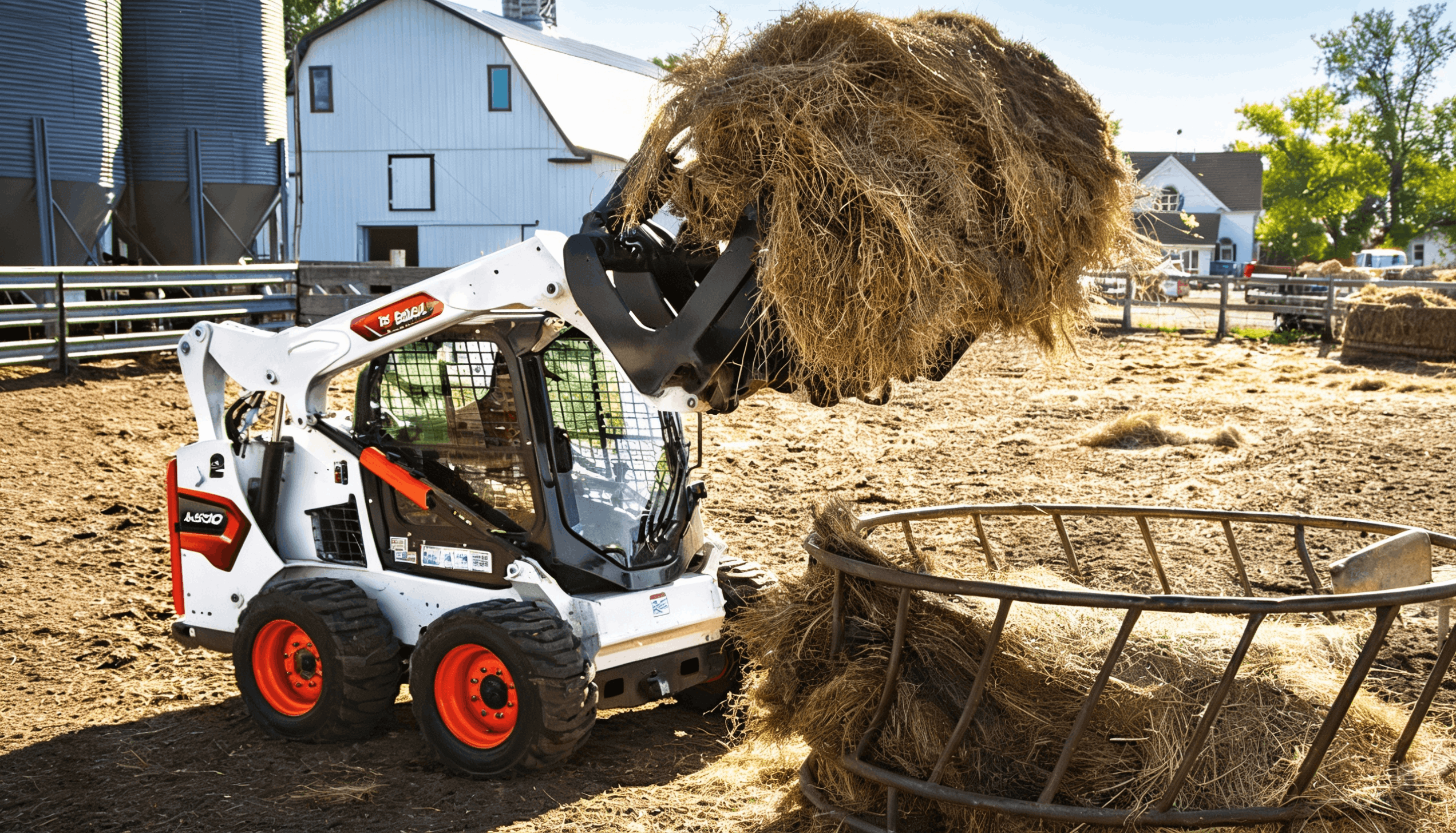
Modern agriculture has come a long way from hand tools and animal-drawn plows. Today, farms of all sizes rely on compact, powerful machinery to get more done in less time.
Among farm equipment, Bobcat stands out as one of the most versatile and practical solutions for agricultural operations.
Whether you are managing a large plantation or working on government-backed agricultural development projects, Bobcat machines bring a level of flexibility compared to traditional farm equipment.
Let’s explore why Bobcat is a strong choice for farming and how it helps operations run better from the ground up.
Advantages of Using Bobcat Equipment for Modern Agriculture
Before we get into the applications, let’s discuss what sets Bobcat apart from general-purpose heavy equipment.
Compact Size With Capability
Most bobcat machines for sale in the Philippines are built around a skid-steer or compact track loader chassis. These machines are designed to operate in tight spaces without sacrificing lifting power or hydraulic performance.
On a farm, that means getting into greenhouses, between crop rows, inside livestock barns, and along narrow access paths without causing damage to the surrounding area.
A Platform Built For Attachments
This is Bobcat’s biggest advantage in the agricultural space. The universal attachment mounting system means one machine can run dozens of different tools, from augers and tillers to hay forks and brush cutters.
Operators can switch attachments in minutes, turning a single unit into multiple pieces of specialized equipment.
Durability Built For Field Conditions
Bobcat machines are engineered to handle rough terrain, mud, uneven ground, and heavy daily use. Track-based models, in particular, distribute ground pressure evenly, helping protect soft or sensitive soils from excessive compaction.
Lower Total Cost of Ownership
Compared to purchasing multiple single-function pieces of equipment, a Bobcat unit with a range of attachments is a smarter investment. Operating and maintenance costs are also kept manageable, especially when you have a reliable service and parts partner behind you.
For those considering Bobcat as an agriculture investment, these factors make a compelling case regardless of farm size or sector.
8 Ways Bobcat Equipment is Used in Farming and Agriculture
The range of tasks a single Bobcat machine can handle on a farm might surprise you. Here are eight applications that show how much ground one compact unit can cover.
1. Land Clearing and Site Preparation
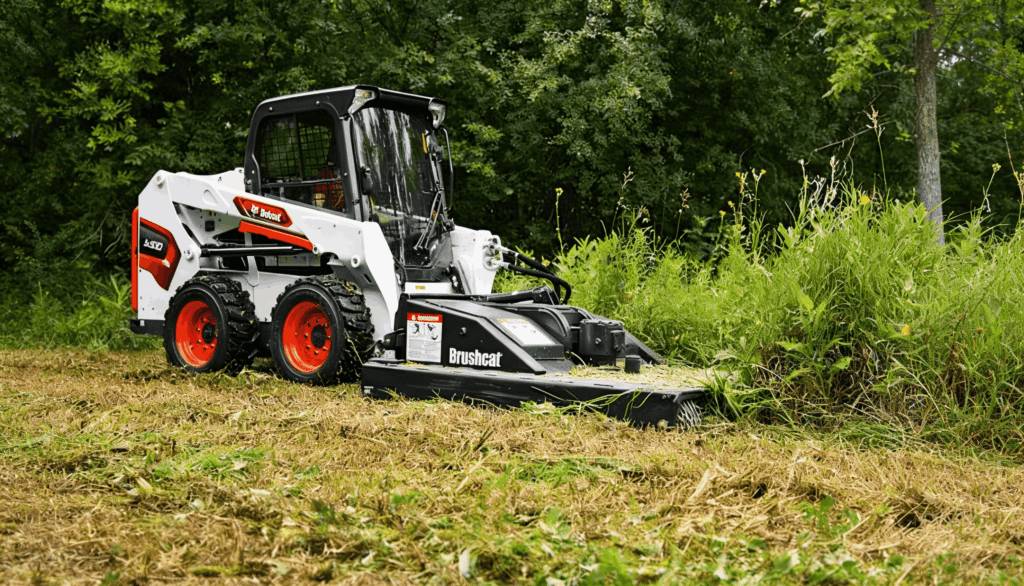
Before any planting begins, the land needs to be cleared of debris, rocks, stumps, vegetation, and old structures. This is one of the first places where Bobcat farm machines are put to work.
Equipped with a root grapple or brush cutter attachment, a Bobcat skid-steer can clear a significant amount of acreage efficiently.
For larger rocks and stumps, a hydraulic breaker or stump grinder attachment handles the job without requiring a separate piece of heavy machinery.
This also applies to government agricultural projects and land conversion programs where site preparation is an early critical phase.
2. Soil Tilling and Seedbed Preparation
A well-prepared seedbed is the foundation of a good harvest. Bobcat loaders fitted with tiller or rotary cutter attachments can break up compacted soil, mix in organic matter, and create an even surface ready for planting.
The depth and width of tillage can be adjusted based on the crop type, making this a flexible approach for farms growing multiple products.
Unlike large tractor-based equipment, a Bobcat can operate in smaller plots and irregularly shaped fields without wasting time or damaging field edges.
3. Material Handling and Transport
Farms move a lot of material every day: feed, fertilizer, and harvested crops. Bobcat loaders with standard bucket or pallet fork attachments handle all of this efficiently.
Operators can quickly load and unload trucks, transport materials across the property, and stack products in storage areas with minimal manual labor.
This is particularly valuable during harvest season when time is tight and every hour of delay affects output and quality.
4. Trenching for Irrigation and Drainage Systems
Proper water management is critical in any farming operation. Bobcat machines equipped with a trencher attachment can dig precise channels for irrigation lines, drainage pipes, or underground utility runs.
The compact size allows the machine to work close to existing crop rows or around permanent structures without disturbing the surrounding area.
For large-scale irrigation projects supported by local governments or agricultural agencies, having compact equipment that can work in tight sections of farmland is a practical advantage.
5. Livestock Farm Management
Bobcat equipment plays an important role in keeping livestock operations. In barns and feed lots, Bobcat skid-steers are used to move and distribute feed, clean out waste and bedding material, and transport heavy supplies.
The enclosed cab option on many Bobcat models helps protect operators working in dusty or humid barn environments, which is a practical feature that directly affects worker safety and comfort.
The maneuverability of these machines inside confined barn structures is something that standard farm tractors cannot replicate.
6. Grading and Leveling Farm Roads
Farm access roads take a beating year-round, especially during the rainy season when ruts, potholes, and erosion can make it difficult to move equipment and trucks.
A Bobcat machine fitted with a grading blade or box blade attachment can reshape and level these roads, improving access across the property and protecting vehicles from unnecessary wear.
This function also applies to leveling ground within farm compounds, around storage facilities, and near water sources.
7. Post-Hole Drilling and Fencing
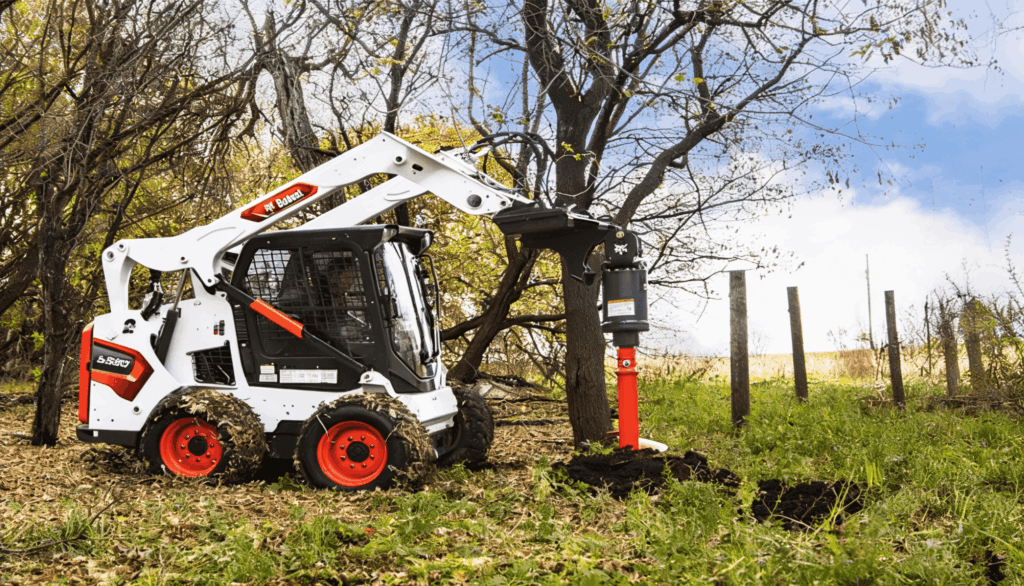
Fencing is a year-round task on most farms, whether it is to contain livestock, define property boundaries, or support crop trellises and shade nets.
A Bobcat with an auger attachment can quickly drill post holes to precise depths, reducing one of the more labor-intensive tasks in farm management.
The same auger setup is also used for planting trees, installing signage, or setting foundation posts for structures such as storage sheds and equipment shelters.
8. Debris Removal and Crop Residue Management
After harvesting, fields accumulate stalks, husks, fallen branches, and other organic residue that need to be cleared before the next planting cycle.
A Bobcat fitted with a grapple or sweeper attachment can efficiently collect and move this material, either composting it on-site or loading it for removal.
This step is often overlooked in discussions about farm productivity, but efficient post-harvest cleanup directly affects how quickly a field can be returned to production.
It also reduces pest and disease pressure by removing potential habitats left behind by crop residue.
Get the Right Bobcat Farm Equipment for Your Operations
Farming today demands equipment that can keep up with tighter schedules, more demanding crops, and challenging terrain.
Bobcat has built a strong reputation in farming and agriculture applications precisely because its compact machines handle the full range of farm rigid tasks.
CIVIC Merchandising offers a wide range of Bobcat farm equipment for sale, from skid-steer loaders suited for smaller farms to powerful compact track loaders for larger operations.
Whether you are an acquisition officer evaluating options for an agricultural development project or a project manager sourcing reliable compact equipment, we are here to help you find the right fit.
Reach out to us today and let us help you put the right farming equipment to work.